
Lower GI Diagnostic Pathway
Assess and investigate lower GI symptoms with confidence
Practical, step-by-step pathways for assessing, investigating and referring adults and children with lower GI symptoms. Evidence-based and peer-reviewed, following NICE guidance and endorsed by the RCN and RCGP.


A step by step guide for Primary Healthcare Professionals
Why the pathway was created and how it can help you in your clinical practice.
Created December 2025.
Why these resources matter
Clear, consistent clinical pathways support fast and accurate assessments of lower GI symptoms. These pathways help standardise decision-making and reduce unnecessary variation in care. Complementary patient facing resources can also help patients know what to expect.

Reduce time to diagnosis

Increase consistency in care.

Support informed patient conversations
How the pathways are relevant for secondary health.
Created December 2025.
Explore the pathways
Use these pathways to support structured history taking, guide appropriate investigations, and reduce delays in diagnosis.
Adult pathway
A concise reference tool for assessing lower-GI symptoms in adults. Designed for use before or during consultations.
Scope overview:


Paediatric pathway
A concise reference tool for assessing lower-GI symptoms in children and young people. Designed for use before or during consultations.
Scope overview:
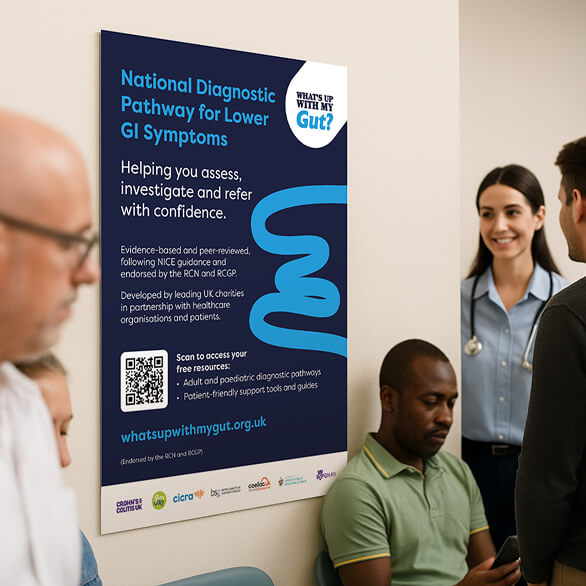
Making the most of these resources

FAQs for clinicians
How should I use these pathways in practice?
These pathways are designed as quick-reference tools during consultations to support assessment, investigations and referral decisions for lower-GI symptoms.
Are these pathways aligned with NICE guidance?
Yes. NICE guidance was referred to during development to inform information and guidance. The pathways were also developed with input from The Association of Coloproctology of Great Britain & Ireland, British Society of Gastroenterology (BSG) and British Society of Paediatric Gastroenterology, Hepatology and Nutrition (BSPGHAN).The pathways have also been endorsed by the RCGP and RCN.
Can I share this website with patients?
Absolutely. The Patients tab contains useful materials to support patients. All resources are free to download, print and hand out to patients with persistent lower GI symptoms.
How often are these materials updated?
The pathways are reviewed every 3 years, with the next update due in 2027.